How AI Is Changing Schools Forever

Education has always grown together with the world around it. Long ago, students learned from chalkboards and heavy textbooks. Later came libraries, computers, and the internet. Today, schools are experiencing another major change—one that isn’t led by new buildings or stricter rules, but by Artificial Intelligence (AI).
AI is no longer something we imagine in the future. It is already part of daily school life. Students meet it in learning apps and online platforms. Teachers use it to manage lessons, review progress, and design learning activities. Parents see it in the tools their children use at home. Because of this, many people are now asking important questions: What will schools look like in ten years? Will teachers still matter? And can education stay meaningful when machines can provide information instantly?
A Shift Toward Learning That Fits Each Student
Every student learns differently. Some move fast. Others need more time. Some enjoy reading, while others learn better through pictures or practice. For a long time, schools had no choice but to teach everyone in the same way.
AI is slowly changing that.
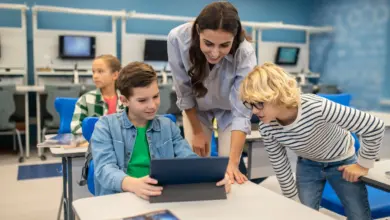
Today, many learning systems can notice how a student studies and which topics are difficult for them. Based on that, lessons can adjust. A student who struggles gets extra support. A student who understands quickly receives harder challenges. Over time, this creates a learning experience that feels less stressful and more supportive.
Instead of pushing everyone forward at the same pace, education is beginning to move toward something better: helping each student move forward in their own way.
Teachers Are Still the Heart of the Classroom

It is natural for people to worry that AI might replace teachers. But teaching has never been just about giving information. It is about listening, encouraging, guiding, and understanding.
- AI cannot feel when a student is discouraged.
- It cannot inspire confidence.
- It cannot build trust.
What AI can do is take over repetitive tasks like grading papers, tracking attendance, and organizing data. When technology helps with these jobs, teachers get more time to focus on students.
In this way, AI does not replace teachers—it supports them.
The classroom becomes not less human, but more.
Opening the Doors to Education Around the World
AI has also changed who gets access to education. Students in remote areas, people with physical challenges, and adults who want to continue learning now have more chances than ever before.
Education is no longer limited to expensive schools or big cities. A phone, an internet connection, and the right tools can open new doors. AI has the power to close the gap between those who have access to education and those who once did not.
But this progress must be handled carefully. Without proper support, technology can also increase inequality. That is why equal access, reliable internet, and digital skills are just as important as the tools themselves.
Real Concerns That Must Be Taken Seriously
AI does not bring only benefits. It also comes with real challenges.
People worry about:
- students’ personal data being misused
- overdependence on machines
- cheating becoming easier
- reduced social interaction
- unequal access to technology
These concerns matter. Without clear rules and strong guidance, technology can harm learning instead of helping it. AI should strengthen thinking, not replace it. It should support effort, not remove it.
Schools must create responsible policies and teach students how to use technology wisely. Education must always stay in control of AI—not the other way around.
Preparing Students for a New World
AI is not only changing schools—it is changing the future of work. Jobs are evolving, and so are the skills people need. In today’s world, memorizing information is not enough. Students must learn how to think, question, adapt, and create.
Education must now focus more on:
- critical thinking
- communication
- problem-solving
- ethical decision-making
- responsible use of technology
AI can help students learn faster. But it cannot teach them how to live wisely. That role still belongs to education—and to human guidance.

Keeping Education Human
At its heart, education is not about machines or systems. It is about people.
- It is about helping young minds grow.
- It is about shaping character.
- It is about learning how to care, think, and act responsibly.
AI can offer information, but it cannot offer values. AI can follow instructions, but it cannot teach purpose.
As schools use more technology, they must protect the human side of learning. Relationships, empathy, encouragement, and integrity must never be replaced by machines.
Conclusion : AI Is a Tool, Not the Future Itself
AI is a powerful tool that can improve schools, support teachers, and open learning opportunities across the world. But without guidance, responsibility, and care, the same tool can damage the heart of education. The future of schools will not be decided by software. It will be decided by people and by the choices we make today.